

Dental Plaque and Tartar in Dogs and Cats
Tartar is formed by the hardening of dental plaque. Food debris, saliva, and bacteria adhere to the teeth, gums, and interdental spaces, where they are converted into dental plaque with the help of bacteria. If dental plaque is not adequately removed by using a toothbrush and oral hygiene products, it accumulates, most often in places near the openings of salivary gland ducts or in hard-to-reach places. A microbiologically burdened animal mouth (overgrown bacteria, yeasts, viruses) smells more intensely. Calcium from saliva begins to deposit in the dental plaque, forming tartar. The surface of tartar is rough, therefore it serves as an ideal base for the accumulation of further food residues and dental plaque. Tartar, which is often as sharp as a razor blade, causes the gums to recede. First, it causes gingivitis, exposes the necks of the teeth, and if left untreated, can develop into bone loss and tooth loss (periodontitis, periodontosis).
Regular Mechanical Cleaning of Teeth and Gums
As with humans, the right choice of food affects the composition of the microflora in the oral cavity of animals. Even with the right diet, dental plaque and tartar continue to accumulate (even healthy-eating people lose their teeth if they don’t clean them). However, even the healthiest diet cannot replace regular removal of dental plaque by mechanical cleaning (with a toothbrush). While a person can clean their dental plaque every day, a dog or cat cannot remove dental plaque on their own. Therefore, the help of a person who will regularly care for their pet’s mouth with a toothbrush and veterinary oral hygiene product is essential. Of course, the animal also needs to visit a dental
hygienist at the veterinary doctor regularly.
Tartar Removal Only by a Veterinary Doctor
Insufficient oral hygiene and the mineral content in saliva cause permanent tartar build-up. Originally soft and easily removable dental plaque becomes irremovable by common procedures when transformed into tartar. The intervention of a veterinary doctor is necessary. Tartar removal is exclusively the responsibility of a veterinary doctor and should be preceded by sedation or anesthesia to allow for a high-quality and thorough examination of the oral cavity. If the animal is fully conscious, it is not only impossible to ensure complete and firm restraint of the patient, and thus diagnose properly, but the animal is likely to suffer pain and soft tissue injuries (e.g., the tongue) may occur.
What Care should You Choose for your Animal after Tartar Removal?
Dental hygiene and tartar removal traumatize the gums and mucous membranes. Bruising can cause bleeding gums and swelling. To reduce the risk of microbial infection, the veterinarian will use a local antiseptic after treatment and prescribe medications according to the overall condition of the animal’s periodontium. In home care, it is then necessary to increase regular mechanical cleaning.
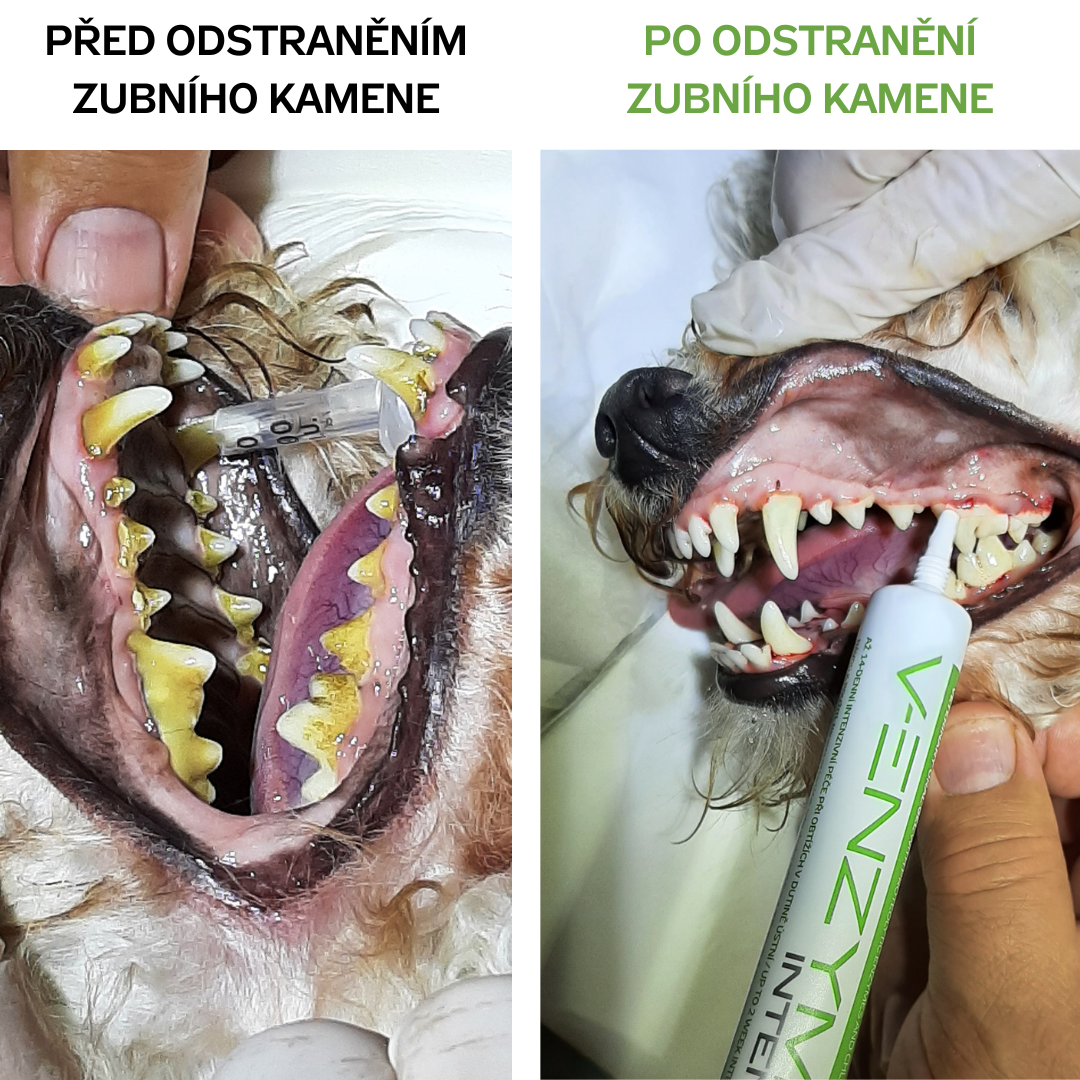
How Does VENZYMEL Help?
VENZYMEL veterinary products are gentle and effective gels suitable for the hygiene of sensitive, swollen, and bruised gums after a veterinary procedure (VENZYMEL Intensive 120) and for several days immediately after in home care. In long-term home care of the pet’s gums, VENZYMEL helps reduce the microbial load, the deposition of dental plaque, and thus reduce bad breath (VENZYMEL Prevent 35).
VENZYMEL non-foaming mucoadhesive gels are flavorless and can help heal minor injuries. Thanks to the content of adhesive ingredients, they last longer on the gums and mucous membranes and allow for a longer duration of action of the active ingredients. VENZYMEL gels can be applied to the affected areas and also used as an alternative to toothpastes for mechanical cleaning together with a toothbrush.
The active ingredients in VENZYMEL products are a patented combination of proteolytic enzymes and the antiseptic chlorhexidine. Proteolytic enzymes accelerate the healing of soft tissues and significantly support the antimicrobial effect of chlorhexidine. Thanks to this, VENZYMEL gels contain up to 4x lower concentration of chlorhexidine, but have the same antimicrobial efficacy as commonly used chlorhexidine products. That is why VENZYMEL gels can be used for a longer time and without undesirable effects.